
Reviewed · NORTH QATAR DAY TRIPS
Doha: North of Qatar Tour, History and heritage
Qatar’s northern coast gives you a very different view of the country from Doha’s towers and shopping malls. This four-hour tour links an old pearling harbor, quiet mangroves, a UNESCO-listed archaeological site, and a huge desert artwork in one outing.
I like the small maximum group of six, since it should make conversation and photo stops easier. I also like the private, air-conditioned transport, bottled water, and tea or coffee, all useful in Qatar’s heat. The main drawback is the tight schedule: four hours is short for a route reaching far north, and the Al Zubara admission fee is not included.
Key points to know before booking
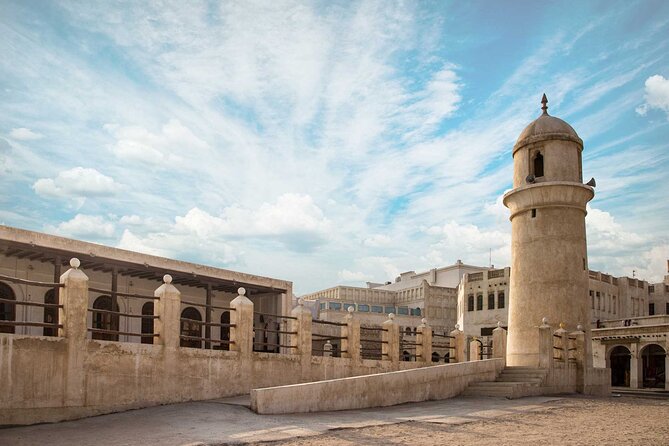
- Al Khor reveals Qatar’s pearling past: See the harbor and the town that once supported fishing, dhow building, and pearl collecting.
- Purple Island offers a quiet nature break: Expect mangroves, open space, and a walk rather than a major monument.
- Al Zubara is the historical anchor: The fort and nearby ruins explain Qatar’s former trading and pearling settlements.
- The tour includes a striking desert artwork: Twenty circular shelters form a large geometric pattern in the sand.
- Guides make a major difference: Tariq, Usman, Wadood, Zia, and Adil have all been praised for commentary, flexibility, or photography.
- The value depends on your priorities: At $59 per person, it is appealing for private transport and several distant stops, but extra site fees and a brisk pace matter.
Why the north of Qatar is worth your time
Doha can keep you busy for days, but it tells only part of Qatar’s story. The northern region shows how much of the country’s older life depended on the sea. Before cultured pearls changed the industry, coastal towns supported pearl collectors, fishermen, boat builders, and traders.
This tour works because it brings together several kinds of place. You get a working-style harbor at Al Khor, a natural setting at Purple Island, an important archaeological site at Al Zubara, and a modern piece of public art far out in the desert.
I would choose it for a first visit if you want context rather than a single polished attraction. You are not simply driving to a fort and back. The route gives you a sense of how Qatar’s coastal economy, settlements, and modern identity fit together.
The experience is advertised at about four hours, with pickup available and private transport for no more than six people. That is a comfortable format for a small family or group of friends. It also means the guide can adjust small details, such as a tea stop or drop-off point, when time allows.
The route is not a slow archaeological study. You will be moving between stops, and the total drive can make the day feel more like a carefully packed sampler than a relaxed day in the north. If you want long walks, kayaking, or extended time at the ruins, a longer private excursion would suit you better.
More days up the north coast from Doha:
- Full Day Tour to Qatar North And West With Pickup From Doha
★ 4.9 · 371 reviews - North Qatar Half-Day Tour: Al Zubarah, Purple Island & Mangroves
★ 5.0 · 337 reviews - From Doha: Day Trip to North And West Qatar With Pickup
★ 4.9 · 336 reviews
Al Khor and the story of Qatar’s pearling coast
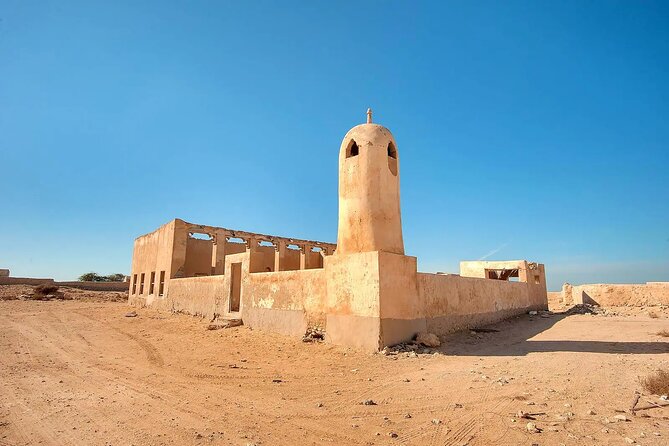
The first stop is Al Khor, about 50 kilometers north of Doha. Its Arabic name refers to a place surrounded by the sea on three sides, and the town is older than Doha, though much smaller today.
Al Khor once served as a center of Qatar’s pearling industry. That changed after cultured pearls reduced the importance of natural pearl collecting. Today, the harbor offers a more modest but useful introduction to the old coastal economy, with traditional fishing dhows, a corniche, and nearby mangrove colonies.
You have about 45 minutes here, with no admission charge listed. That is enough time to walk around, look at the boats, and hear how fishing, pearl collecting, and dhow construction shaped local life. A museum in the town focuses on those same trades, though the tour details do not confirm whether museum entry is included or guaranteed, so ask your guide before counting on it.
This is a good opening stop because it gives the rest of the day a purpose. The mangroves later in the route are not just pleasant scenery. They connect to the coastal environment that supported fishing and settlement.
Do not expect Al Khor to feel like a large historic quarter. The appeal is its setting and the story behind it. If you prefer grand buildings and formal museums, this may feel brief. If you like seeing how a town grew from the sea, the stop earns its place.
Purple Island and the mangrove walk
Purple Island, also called Al Khor Island, is the most peaceful stop on the route. The area has mangroves, greenery, and open space beyond Al Khor. The name may sound dramatic, but the attraction is simple: it is a chance to leave the city behind and walk in a natural setting.
You have roughly 45 minutes here, and admission is listed as free. The tour description mentions walking, family picnics, and kayaking as possible activities in the area. Do not assume kayaking is part of this tour, however. No kayak rental or water activity is included in the stated price.
The best use of your time is likely a short walk and a chance to take in the mangrove channels. One direct account describes a peaceful boardwalk with plenty of life around it, which gives you a useful idea of the mood. This is not a fast photo stop beside a road. It is one of the few parts of the tour where the natural setting gets the main stage.
Wear shoes suitable for walking and bring sun protection. The tour includes bottled water, tea, or coffee, but Qatar’s heat can still make even a short outdoor stop tiring. Your guide may point out good photo spots, and several guides have been praised for taking pictures for the group.
Purple Island is also where the limits of a four-hour schedule become clear. Forty-five minutes gives you a taste, not a full nature outing. If you want to stay longer, walk farther, or kayak, check ahead to see if a private arrangement is possible.
Al Zubara Fort and a vanished trading town
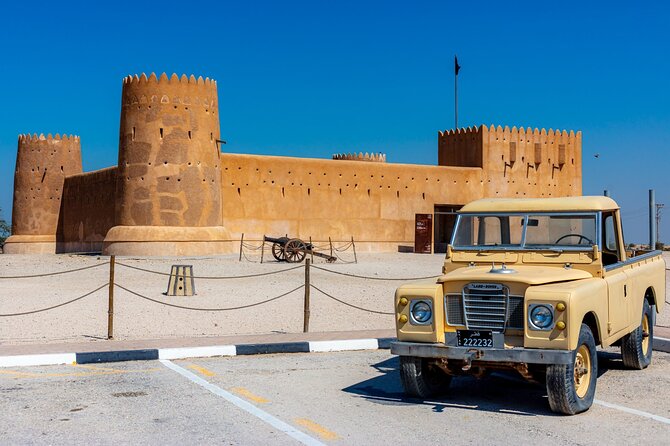
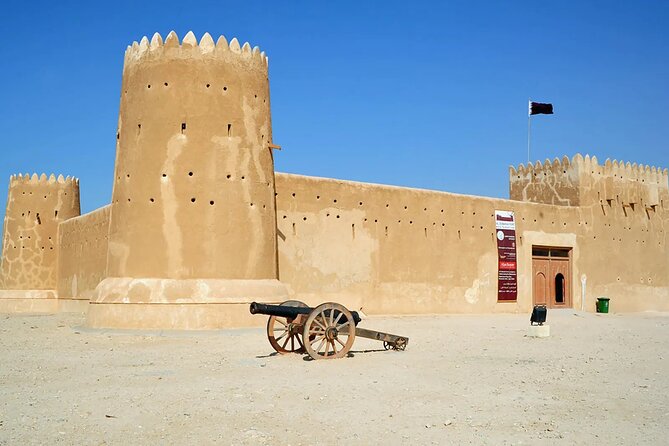
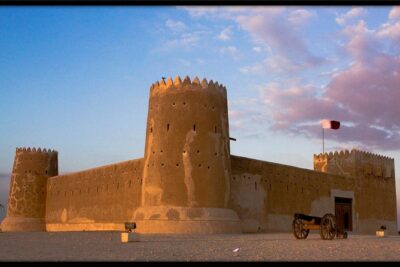
Al Zubara Fort is the most important historical stop. Located in northwestern Qatar, the fort was built beside the ruins of an older fort and the remains of a once-active port town. Al Zubara grew through trade, fishing, and pearling before it was abandoned.
Today, the fort helps protect and explain the archaeological site. It is part of the Al Zubarah Archaeological Site, Qatar’s first UNESCO World Heritage Site. Archaeologists continue work in the wider area, and objects found there are displayed in the renovated fort.
You have about one hour at this stop. That is the longest single visit on the route, and rightly so. The site offers more than a restored building. It lets you picture a settlement that once connected Qatar to regional trade, then gradually disappeared from daily life.
I would listen closely to the guide here. The ruins can be hard to read without explanation, especially when much of the old town is low to the ground. A strong guide can turn scattered walls and foundations into a story about port life, trade, and the collapse of the pearling economy.
Admission is not included. The tour information also says all fees and taxes are excluded, so you should confirm the current entrance cost before setting out. This is the one stop where an extra fee is specifically noted, and it affects the true cost of the trip.
The fort itself is not a massive complex. Give it value through context rather than size. If you want a large collection of intact buildings, you may find the site modest. If you want to understand how a coastal settlement worked and why it mattered, this is the strongest stop of the day.
A few more things to do in Doha worth a look
- Full Day Qatar’s North And West tour || History & Heritage
★ 5.0 · 229 reviews - Desert Safari + History to Modern City Tour
★ 5.0 · 174 reviews - From Doha: Culture & History Qatar Tour to the North & West
★ 5.0 · 51 reviews - 8-Hour Private Cultural Tour
★ 5.0 · 47 reviews
The circular desert artwork near Al Shamal
The final listed stop is a large site-specific artwork identified by map coordinates rather than a familiar attraction name. It consists of twenty circular shelters, three single rings, and two double rings spread across the desert.
At first, the structures look scattered. They are actually arranged around a fivefold symmetrical pattern, with ten shelters at the center forming a pentagram. The design connects geometry with ideas that may also be seen in sophisticated Islamic designs from the medieval period.
You have about 40 minutes here, with no admission charge listed. The setting gives you room to step back and see the arrangement as a whole. This is a good place for wide photographs, especially if your guide knows where to position the group.
The artwork is a sharp contrast to Al Zubara. One stop looks backward through excavated remains, while the other uses a modern installation to engage with mathematics, pattern, and the desert. That contrast keeps the tour from becoming a string of forts and old buildings.
The itinerary also refers to a traditional Qatari village with limestone and mud houses, and to Al Shamal, where Bahrain may be visible on clear days. Those details are part of the wider northern route description, but the four listed stops do not clearly assign time to them. Ask your guide what will be included on your departure date. With only four hours, not every possible sight can receive a full visit.
The guides can shape the whole experience
The clearest pattern in the feedback is the importance of the individual guide. Tariq is praised for strong explanations, photo help, tea, and attention to the group. Usman is repeatedly described as friendly, professional, flexible, and good at explaining history, buildings, villages, forts, and the desert.
Other named guides include Wadood, Zia, and Adil. Wadood is described as good at explaining local culture and historical sites. Zia is praised for organizing pickup and handling changes to the pickup or drop-off location. Adil is singled out for photography skills.
That does not mean every departure will feel identical. One account describes a guide who was punctual but offered limited commentary, leaving the group to work out much of the history alone. This is an important practical point: the tour’s quality depends heavily on who is assigned.
If you care about historical explanation, ask questions as you go. Al Zubara, in particular, benefits from a guide who can explain what you are seeing. If photography matters, tell the guide early. Several guides have been willing to suggest photo locations and take pictures.
The private format helps here. With no more than six people, you have a better chance of getting answers and making small requests than you would on a large coach trip.
What the $59 price really gets you
At $59 per person, the price is reasonable if you value private transportation and the convenience of reaching several northern sites without arranging a car. A private, air-conditioned vehicle is especially useful in Qatar, where outdoor heat can make long waits unpleasant.
Bottled water, coffee, and tea are included. One guide even took the group for karak tea, a small local touch that can make the day feel less mechanical, though it should not be treated as guaranteed.
The price does not include all fees and taxes, and Al Zubara admission is specifically excluded. That means you should compare the final cost, not only the advertised base price. You are paying for transport, a guide, and a compact route, not an all-inclusive day with every activity covered.
The value is strongest for couples, families, and small groups who would otherwise need to hire a car and plan the route themselves. It is less compelling if you already have a rental car and are happy to explore at your own speed.
Pickup is offered, confirmation comes at booking, and most people can participate. The stated maximum is six people. Free cancellation is available up to 24 hours before the start time. Inside that window, the amount paid is not refunded, and changes are not accepted.
Who should book this north Qatar tour?
I would recommend it to you if:
- You have already seen the main sights in Doha.
- You want a compact introduction to Qatar’s coastal past.
- You prefer a small group to a large coach.
- You want a guide to handle the driving and explain the sites.
- You enjoy mixing archaeology, nature, and modern art.
- You have limited time but want to leave the capital.
I would think twice if you want a slow day outdoors. The route covers a lot, and the time at Purple Island and the artwork is limited. You should also confirm the exact stops if the traditional village, Al Shamal, or a view toward Bahrain is especially important to you.
Should you book it?
Book this tour if you want a practical way to see the northern half of Qatar without renting a car. The strongest reasons are the small vehicle, private transport, Al Zubara Fort, and the mix of coastal nature with older and newer culture.
Go in with realistic expectations. This is a brisk introduction, not a long archaeological visit or a kayaking trip. Ask who your guide will be, confirm which stops are included on your date, and budget for the Al Zubara entry fee. With a strong guide such as Tariq or Usman, the route can become a thoughtful look at Qatar beyond Doha. With limited commentary, it will still cover the sights, but the places will do more of the teaching.
FAQ
How long does the North of Qatar tour last?
The advertised duration is approximately four hours. One account describes a tour lasting six hours, so the actual timing may vary, particularly if the guide adds stops or allows more time at sites.
What places are included?
The listed stops are Al Khor, Purple Island or Al Khor Island, Al Zubara Fort, and the circular desert artwork near the provided map coordinates. The wider description also refers to a traditional Qatari village and Al Shamal, so confirm whether those are included on your departure.
Is transportation included?
Yes. The tour includes private transportation in an air-conditioned vehicle, with pickup offered. The maximum group size is six people.
Is entry to Al Zubara Fort included in the price?
No. Admission to Al Zubara Fort is listed as not included. All fees and taxes are also excluded, so check the current additional costs before the tour.
Are food and drinks included?
Bottled water and coffee or tea are included. A stop for karak tea has also been provided on some tours, but it is not listed as a guaranteed separate inclusion.
Can I cancel for a full refund?
Yes, if you cancel at least 24 hours before the experience starts. Cancellations or changes made less than 24 hours before the start time are not accepted for a refund.
Just added in Doha
- “Doha Desert Safari with all activities”★ 5.0 · 3 reviews
- Airport Transfer – TO or FROM Hammad International Airport★ 4.5 · 14 reviews
- Doha Private Airport and City Transfers★ 4.0 · 10 reviews
- West Of Qatar Richard Serra sculpture, Mushroom Hills,Camel track★ 5.0 · 18 reviews
- Doha: Desert Safari to the Inland Sea with All Activities★ 5.0 · 17 reviews
- Doha Authentic Food at Souq Waqif and Culture Msheireb Downtown★ 5.0 · 18 reviews
- Combo West and North of Qatar Tour★ 5.0 · 18 reviews
- Half Day Safari Tour With Camel Ride and Sand Boarding in Doha★ 5.0 · 18 reviews
North Qatar Day Trips, compared.

Full Day Tour to Qatar North And West With Pickup From Doha
Read our review →
North Qatar Half-Day Tour: Al Zubarah, Purple Island & Mangroves
Read our review →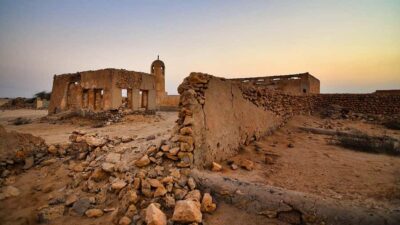
North Qatar Tour | Zubara Fort | Purple Island | Mangros Colony
Read our review →
Doha North Qatar Tour Zubara Fort, Mangroves, Jumail Village
Read our review →
Full Day Qatar’s North And West tour || History & Heritage
Read our review →
North of Qatar Tour to Olafur Eliasson Zubara Fort Jumail Village
Read our review →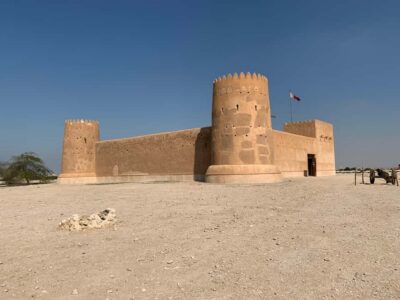
Browse the lists this tour appears in